
Learn with us · Plants, spirit & care
Taíno Medicine: Plants, Spirit & Community Care
Healing knowledge, ancestral relationships, and living traditions.
Taíno healing traditions brought plant knowledge into relationship with spiritual life and community care. Surviving accounts describe specialists whose understanding of illness connected human and spiritual worlds.
Our knowledge is incomplete. Colonial observers shaped much of the written record; archaeology and community testimony offer other perspectives. Caribbean traditions today draw on Indigenous, African, European and later influences. Connections to heritage deserve both respect and careful attribution.

01 · Reading the record
Healing in the historical Taíno world
Ramón Pané’s late-fifteenth-century account of Hispaniola describes healing and spiritual specialists. The scholarly edition edited by José Juan Arrom uses the spelling behiques. These roles should not be reduced to the modern category of physician. A colonial religious observer’s account, transmitted through languages and later editions, is a partial record rather than a complete medical system.
Spelling and context matter: González’s contemporary account uses behike; the Smithsonian’s symposium record calls Marilyn Balana’ni Díaz a bohicia. These contemporary terms should not be assumed to describe precisely the same role as Pané’s behiques. Smithsonian symposium record.
Colonial accounts
Descriptions filtered through an observer’s language and religious assumptions.
Archaeology
Objects and residues establish material contexts; they do not reveal every belief or purpose.
Interpretation
Scholars connect evidence and accounts. An interpretation is not the same as a directly observed practice.
02 · Names, places & periods
Plants and practical knowledge
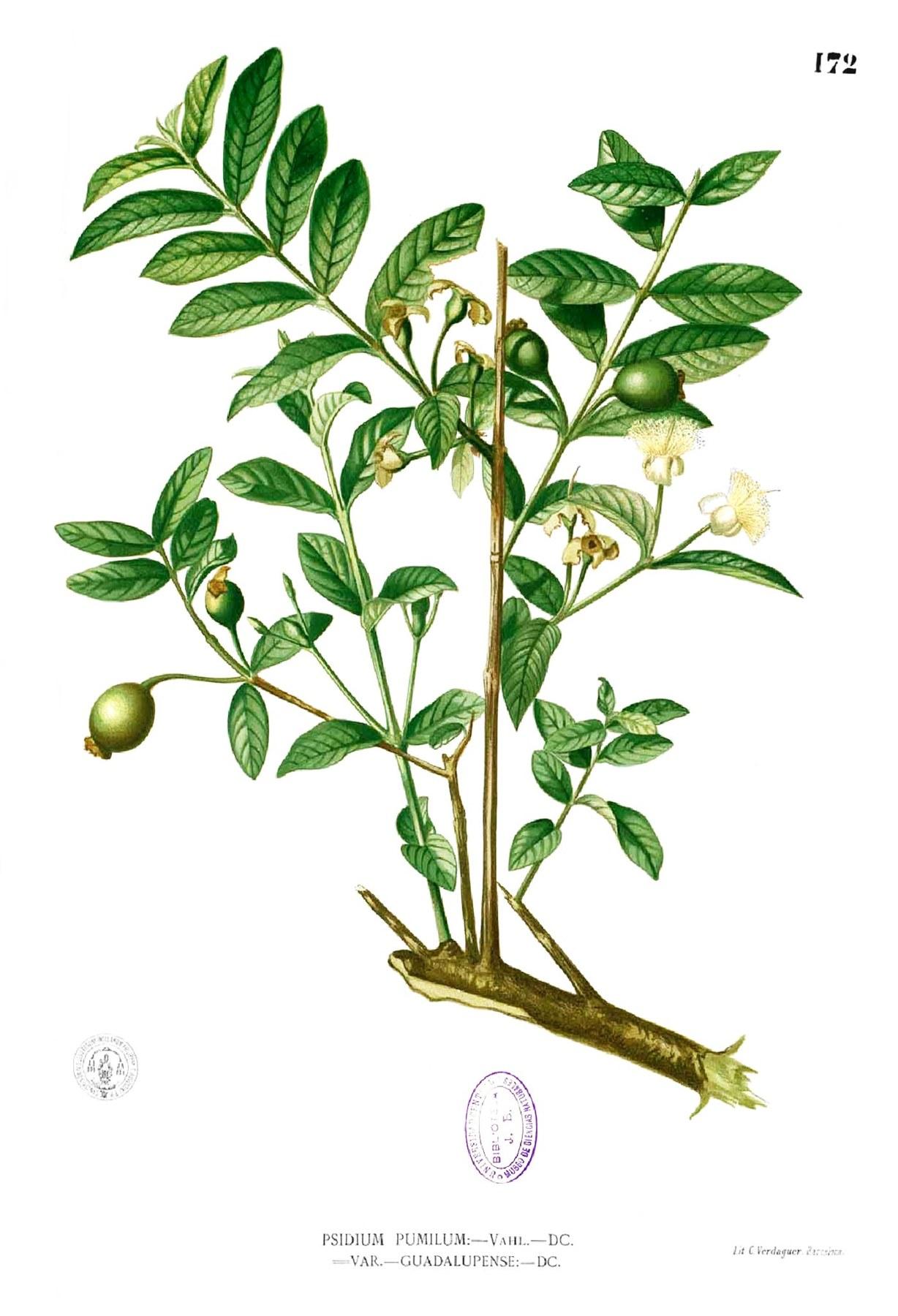
A plant’s presence does not establish a medicinal use. Food, craft and ceremony are also possible contexts. These records describe particular modern reports; neither establishes a precolonial Taíno remedy.
Guava · Guayaba
Psidium guajava L. · Myrtaceae
Dominican Republic · TRAMIL’s monograph cites a 1984 Santo Domingo survey for reports of leaf preparations used for diarrhoea. This documents reported use, not a recommendation or proof of Taíno origin.
Precolonial medicinal connection: unknown in these sources.
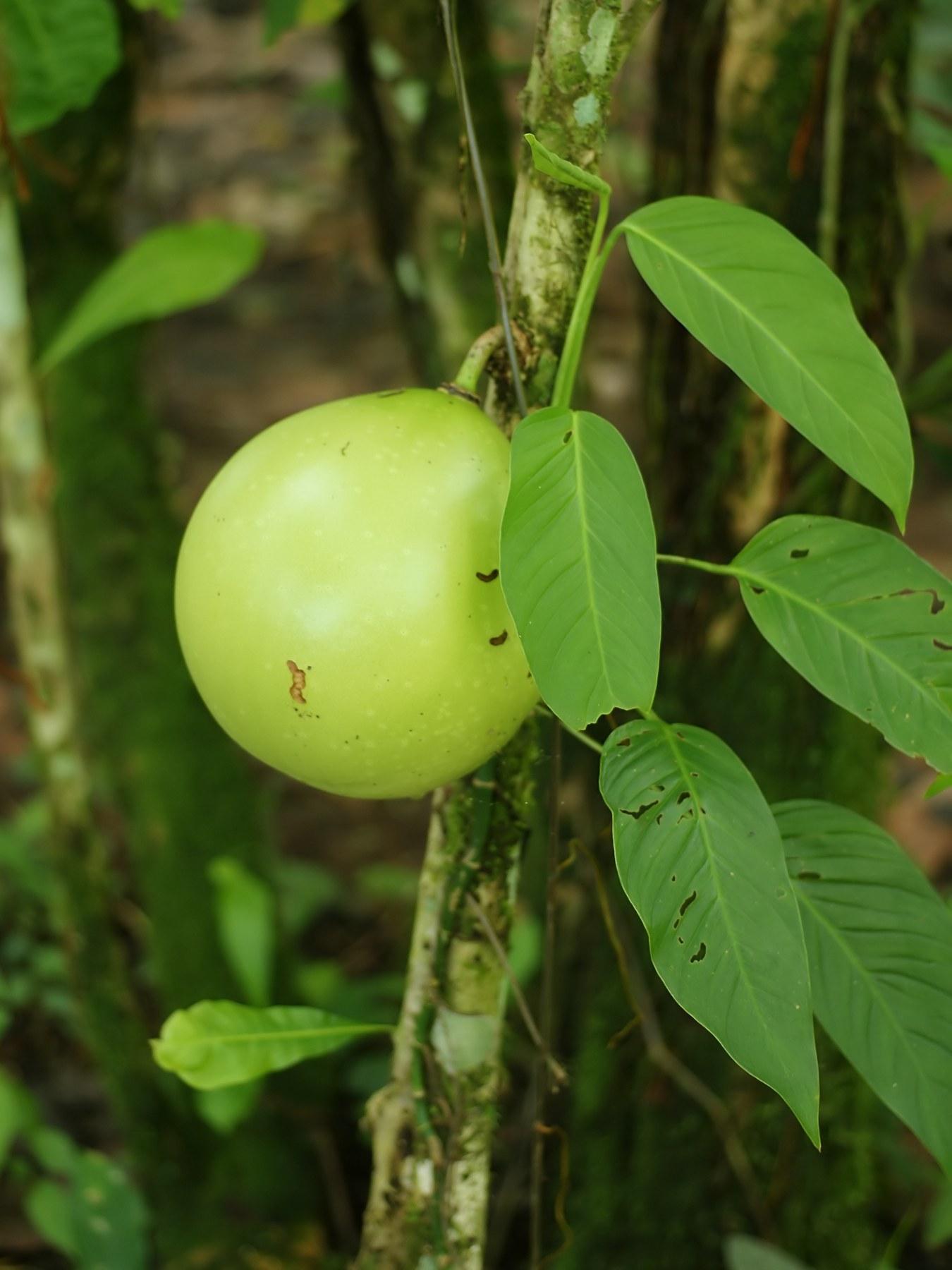

Higüera · Calabash tree
Crescentia cujete L. · Bignoniaceae
Dominican Republic · The same 1984 survey records an external leaf-based use for earache. TRAMIL notes that the attributed effect lacks scientific validation and warns of fruit toxicity. This tree is not the bottle-gourd vine, Lagenaria siceraria.
Precolonial medicinal connection: unknown in these sources.
03 · Material evidence, spiritual meanings
Spiritual healing and ceremony
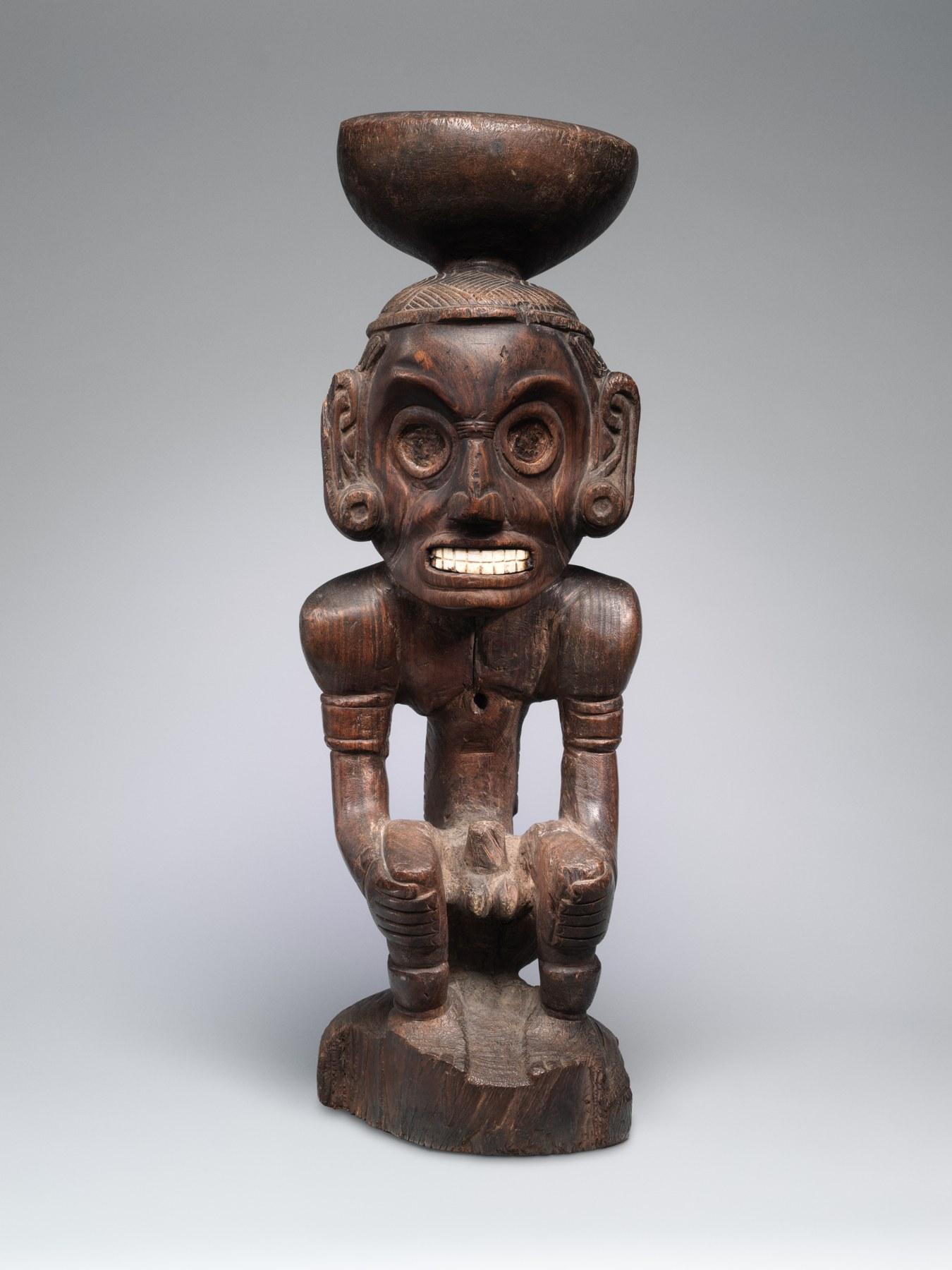
Cemís are discussed in relation to spiritual beings and ancestral relationships. The museum identifies this carved object as a zemí cohoba stand. Its designation supports a ceremonial context, not a diagnosis, a universal medical function or identification with one particular deity.
At an eastern Puerto Rican habitation site dated to 1150–1250 CE, Pagán-Jiménez and Carlson identified starch grains consistent with Anadenanthera peregrina seeds on a coral milling base. The authors interpret the evidence alongside accounts of cohoba, divination and healing. Residues support plant identification; they do not prove a particular treatment or its effectiveness.
- Pagán-Jiménez & Carlson · archaeological cohoba evidence (2014)
- The Met · Zemí cohoba stand, 1979.206.380
Guayacán: what the object tells us
The Met records Guaiacum wood and shell as this stand’s materials. The genus is documented; a species and medicinal application are not established by this object record.
04 · Particular families, particular places
Continuity through curanderismo
Curanderismo is a broad term, not one uniform Caribbean tradition. Puerto Rican family healing, Dominican practices, Mexican curanderismo, Espiritismo and Afro-Caribbean religions should not be treated as interchangeable. Indigenous, African, European and Catholic relationships vary by place and practitioner.
Santiguar in Puerto Rico
Christina M. González records Domingo Hernández’s memories of his great-grandmother, Mama Manuela, and santiguar involving prayer, plants and massage. Hernández understands her teaching as connected to Indigenous values. That heritage interpretation belongs to his testimony; it does not establish every practice as unchanged since precolonial times.
Agua Dulce in Hispaniola
Jorge Baracutei Estevez describes Indigenous remembrance in the San Juan de la Maguana region of the Dominican Republic. Tobacco, casabe, water and stone appear in this particular tradition, amid a wider landscape of African, Catholic and Indigenous relationships. This is not a ceremony shared by all Taíno people.
SmithsonianNMAI · Recorded September 8, 2018; uploaded June 4, 2019.
13:04 · Community testimony and contemporary interpretation of heritage. A conversation about the Taíno movement, not a remedy tutorial or proof of clinical effectiveness.
Watch on YouTube
05 · Ethnobotanical research
Herbalism in Caribbean life today
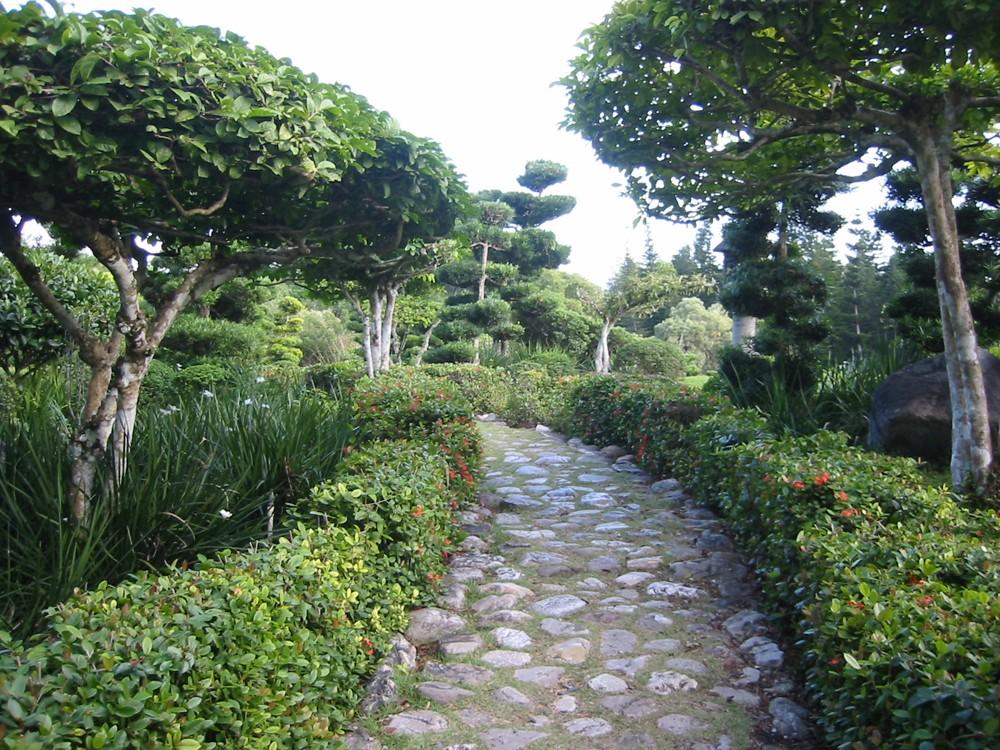
Photo: AFI / Wikimedia Commons · CC BY-SA 3.0 · Resized and JPEG compressed; no other changes.
Contemporary Caribbean garden context; this photograph does not document a Taíno or medicinal garden.
The southeastern Puerto Rico TRAMIL survey collected reports in December 2006–January 2007 across 11 municipalities in the University of Puerto Rico at Cayey’s service region; the paper was published in 2009. It describes knowledge at a particular time and place, not every Puerto Rican household today. Familiar introduced plants, including citrus, must not automatically be assigned a precolonial Taíno origin.
Botellas, households and migration
Vandebroek and colleagues interviewed Dominican participants in New York City and the Dominican Republic. Their study documents household teas and specialist plant mixtures, including botellas. Differences between places and kinds of knowledge show that migration, family teaching and access to ingredients can reshape practice. Reported uses are not clinical proof of safety or effectiveness; no mixture instructions are provided here.
06 · Nourishment & relationships
Food, nourishment and care
Preparing food and beverages can be an act of household care. Contemporary reports of plant teas belong to the ethnobotanical record; historical foodways are a different kind of evidence. Casabe also appears in Estevez’s account of Agua Dulce as a ceremonial element. Food, reported household use and spiritual meaning do not establish a medical cure.
“Food-based care” is an organizing theme here, not the documented name of a formal Taíno medical category.
Explore Foodways →07 · Living knowledge
Remembrance and contemporary practice
Family testimony, community learning and ethnobotanical education offer distinct ways to care for knowledge. Inherited practices, personal interpretations of heritage and deliberate revitalization can coexist without being identical. Gardens and plant access deserve attention in future contributor stories, shared with permission and situated in their own communities.
SmithsonianNMAI · Recorded September 8, 2018; uploaded June 4, 2019.
10:18 · Contemporary community voices: Tai Pelli, Marilyn Balana’ni Díaz and Peggy Robles-Alvarado. Personal testimony and present-day cultural leadership, not a reconstruction of precolonial medicine.
Watch on YouTube
Sources & further learning
Follow the sources to their own historical, archaeological and community contexts. Original publication titles are retained.
- Smithsonian · Taíno Figure, museum interpretation
- Ramón Pané · scholarly edition edited by José Juan Arrom (1999)
- Pagán-Jiménez & Carlson · archaeological cohoba evidence (2014)
- The Met · Zemí cohoba stand, 1979.206.380
- TRAMIL · Psidium guajava, botanical record and survey references
- TRAMIL · Crescentia cujete, botanical record and survey references
- Christina M. González · Abuelas, Ancestors and Atabey (2018)
- Jorge Baracutei Estevez · Agua Dulce in Kiskeya (2018)
- TRAMIL survey · southeastern Puerto Rico (published 2009)
- Vandebroek and colleagues · Dominican plant mixtures (2010)
- María Benedetti · BotaniCultura, ethnobotanical education
- María Dolores Hajosy Benedetti · Earth and Spirit (revised edition, Verde Luz, 1998) · library record
Earth and Spirit is an oral-history and ethnobotanical reading lead. Its library record was checked; the complete book was not reviewed for this page. It is not cited as clinical evidence.
← Back to Learn